
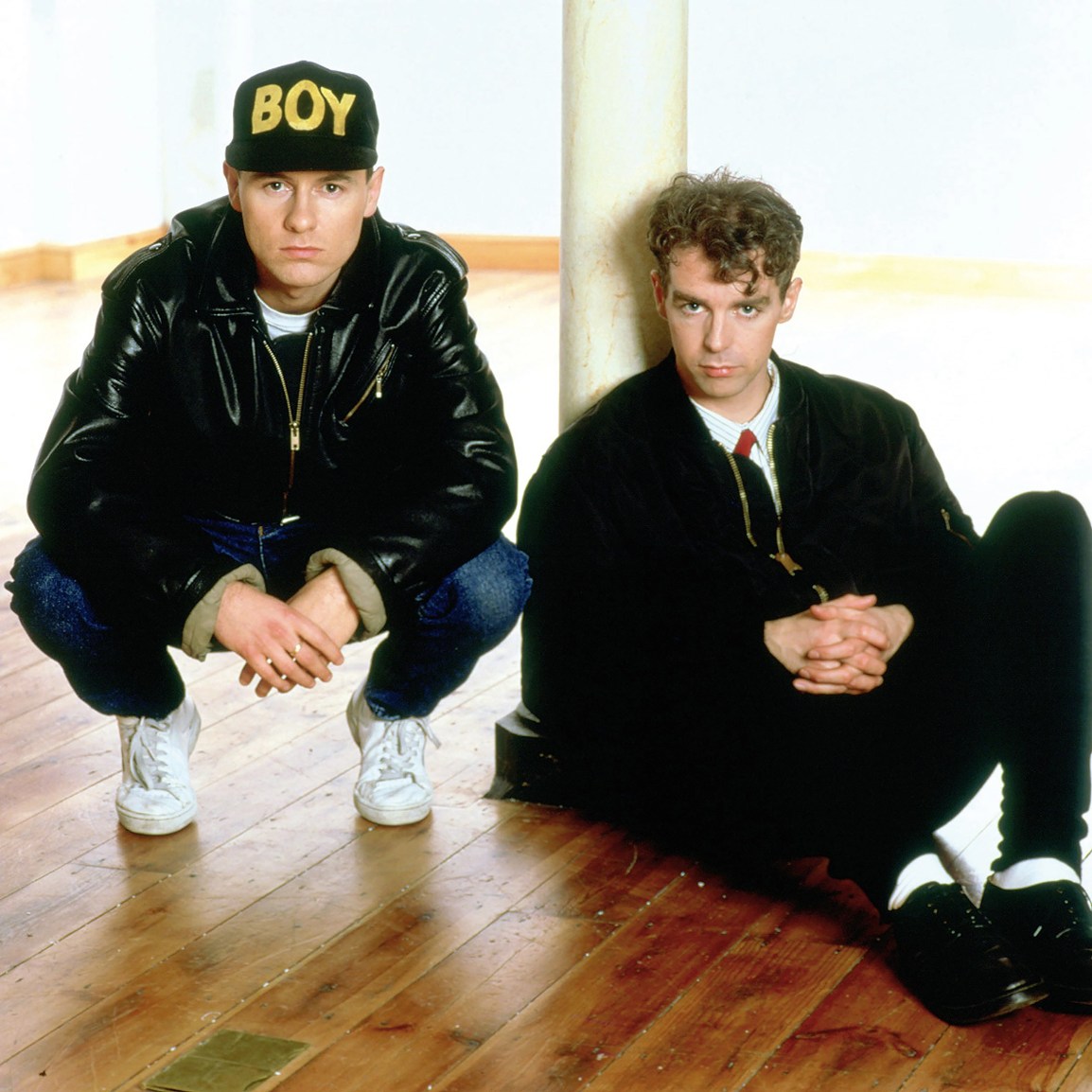
Sometime last summer, my mind started wandering. I know from experience that this is how some of my most in-depth and extensive projects start, so once again my ‘Spidey senses’ were tingling. This time, though, the idea in question wasn’t propelling me towards the margins of underground dance music culture, or the vast rural expanses of East Anglia. Instead, it was dragging me kicking and screaming towards the pop charts and the career of a duo whose music has enriched my life in many ways since I first saw them performing on Top of the Pops in the 1980s: the Pet Shop Boys.
Partly inspired by a discussion with First Floor’s Shawn Reynaldo about a topic he’s extensively written about, the rise in DJs playing ‘pop edits’ (a slightly misleading label, as some are really bootleg remixes rather than old-fashioned re-arrangements for the dancefloor), I started thinking about the relationship between pop and dance music since the dawn of the 1980s and how expressions of underground dance music culture within pop have become increasingly common since the days of disco. I was reminded of a quote from Pet Shop Boys’ Neil Tennant, contained within fan publication Annually 2022: “In Trevor Horn’s definition of pop, it’s a memorable song to the latest dance beat.”
The more I thought about this – and it was quite a lot for some reason – the more it made sense. It’s an idea that applies equally to pop music pre-disco but is especially pertinent when you consider what has happened since synthesisers, samplers, drum machines and other electronic instruments rose to prominence in the 1980s. We’ve had the development, and then rise to commercial domination, of electronic dance music culture; naturally, that has been reflected in the cultural currents of pop music.
It dawned on me that over the last 40 years, two pop artists more than any other have consistently showcased contemporary dance music trends in their work: Madonna and the Pet Shop Boys. Given that I knew the latter’s career pretty well – yes, I could be considered a ‘pethead’, as PSB fans often call themselves – it would make sense to explore their catalogue and career, identify the specific dance music influences at any given time, and see what that told us about wider trends within pop music, culture and society.
After returning to the subject on numerous occasions, I decided to see if The Quietus, one of the most thoughtful and admirable music outlets around, fancied commissioning me to write an essay on the subject. They agreed and the piece was published earlier this week. You can read it here. It is of course free to access, but if you like what you read, I’d recommend taking out a subscription to support the site and their consistently excellent output.
It was surprisingly tricky to write, but only because squeezing 40 years of musical history into 2,500 words is a tough task. There was much I wanted to mention but had to omit, and lots more detail left out to focus on the arguments and narrative. There’s a bigger story, with much more detail, there to tell; maybe I’ll get a chance to do that in future.
When I look back on my formative years, and the path I took to ‘discovering’ dance music and DJing, hearing remixes of pop or crossover dance-pop acts definitely played an important role. When I first started listening to extended 12” versions and dance mixes of Pet Shop Boys singles, in the late ‘80s and early ‘90s, it would be years before I would step foot in a nightclub.
Yet these mixes and remixes offered an introduction to what I might hear in clubs. The first Danny Tenaglia, Junior Vasquez, David Morales, Sasha, MK, Brothers In Rhythm, Moby, Jam & Spoon and Frankie Knuckles remixes and productions I heard were of PSB releases. I could not put them in context at the time, or tell you whether they were representative of underground trends (they of course were – Tennant and Lowe were and to a lesser extent remain keen clubbers with a genuine love of dance music culture), but they still provided me with an education (as did the madcap dance-pop of the KLF and the weirder, weightier reworks of their music by Tony Thorpe under his Moody Boys alias).
It was fun revisiting these remixes – and others – of Tennant and Lowe’s work, as well as earlier revisions and productions by Shep Pettibone, Arthur Baker, Trevor Horn and others, and later reworks that I’d either forgotten or overlooked. Some are fantastic, while others leave me cold. And yes, some sound dated – this is dance music, after all, where trends traditionally come and go even quicker than they do in pop – but even these tell us something about what was happening within dance music culture, or the club spaces of marginalised communities.
It has also persuaded me that playing more versions of Pet Shop Boys tracks in DJ sets is a good idea. Last weekend I managed to squeeze two in when I played with the Sourdough Disco boys in the courtyard of The Full Moon and Attic Bar here in Bristol. The second of these was the insanely long (and rather bonkers) ‘Disco Mix’ of ‘Left To My Own Devices’; when the squelchy TB-303 bassline kicked in after three or four minutes of build, the crowd dancing in front of the DJ booth went mental. It was definitely a moment!
Anyway, pop over to The Quietus and have a read of the essay. It was published as part of ‘Pet Shop Boys Week’, which boasts a series of fresh articles on the pair, including a lovely new interview by site co-founder Luke Turner and a reappraisal of ‘West End Girls’ 40 years on from the release of the Bobby Orlando version. They’ve also opened-up their archives via ‘The Portal’, where you’ll find tons more articles on PSB published at various points over the last 15 years.

 JOIN THE FUTURE
On listen, West End Girls almost has an agoraphobic feel to it — the opening murmurs, like anxiety forming, against the backdrop of street sounds. The double tap of the kick drum like a heartbeat. Then the lyrics kick in.
LikeLike