
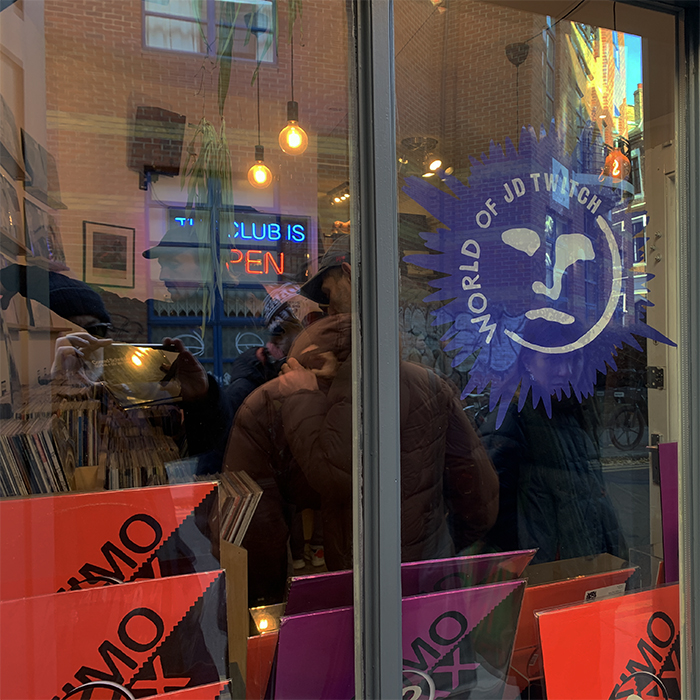
As late, great Optimo co-founder’s vast record collection goes on sale at World of Echo, Join The Future founder Matt Anniss makes the pilgrimage to East London to take it in – and grab his own slice of the great man’s memory-making music
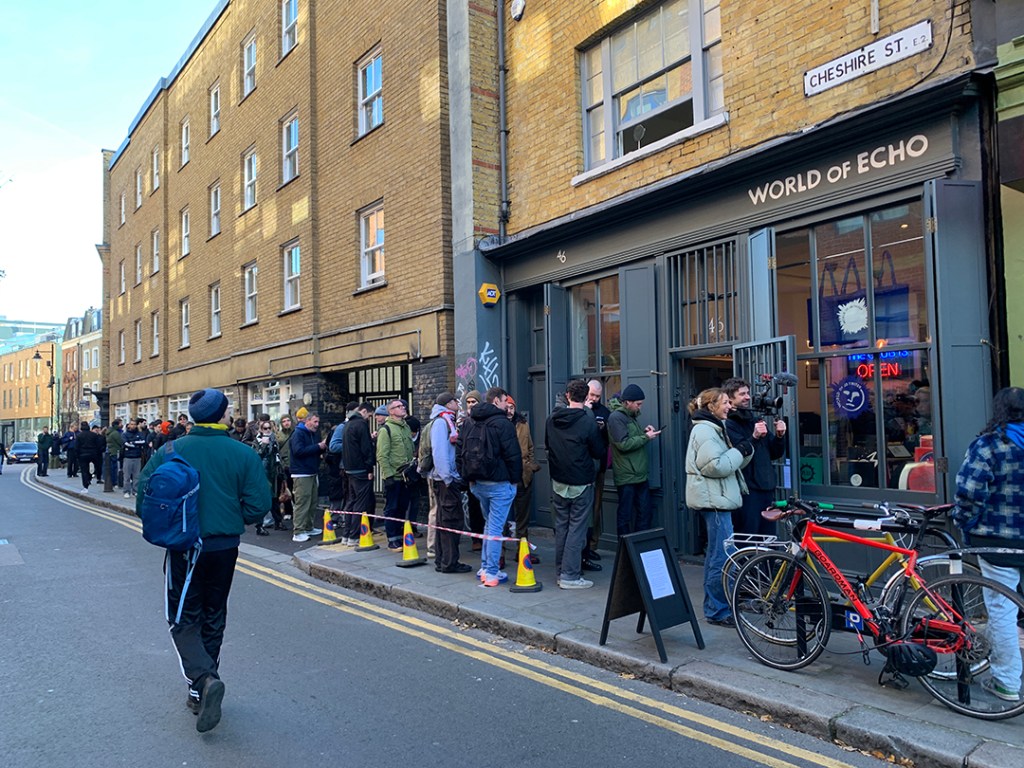
It’s just before 9am on a cold, crisp sunny November morning and already a queue of 30 or so people has formed outside World of Echo, one of London’s most renowned record shops. At the head of the queue, shivering in winter coats, hats and gloves, sit the most dedicated – people who headed down at the crack of dawn to ensure ‘first dibs’ on the records that will go on sale in just over an hour.
This is no ordinary record sale. For the next six days and twice more in 2027, World of Echo will be transformed into ‘The World of JD Twitch’, with every single item on sale – cleaned, catalogued and stickered to denote their origin – coming from the 20,000-strong collection of the late Keith McIvor AKA JD Twitch, the Optimo (Espacio) co-founder and long-serving DJ.
This, too, is unusual. More often than not, collections of this size or prominence are either sold to record dealers, who flog them off via online marketplaces like Discogs and eBay, or flogged off as a job lot at auction. Today, we’ll get a glimpse of – and a chance to buy – between 6,000 and 8,000 records. Not all will be on sale straight away; over the course of the week, racks will be replenished each night, giving those who head down in coming days a chance to snaffle something today’s visitors won’t have got their mitts on.
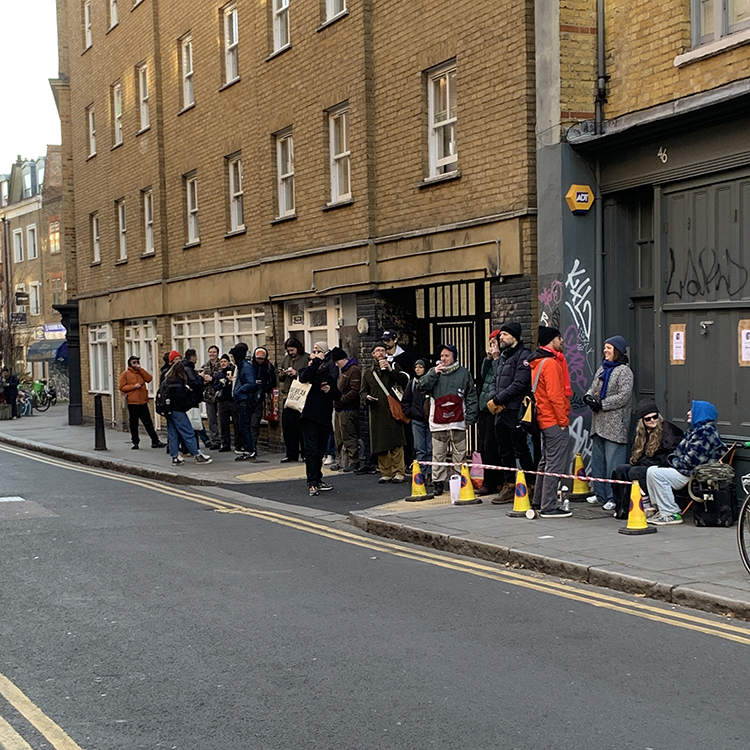
I join the back of the queue and quickly my thoughts drift to the time Keith gave me a glimpse of his collection in its entirety. I was up in Scotland visiting relatives, so an invitation came to stay over at Keith’s house so I could head down to Optimo’s residency at the Berkeley Suite. In the hours leading up to the night, Keith invited me to head down to the garage – where much of his collection was kept – as he needed to pick out some gems to play later.
By this point, I had known Keith for around 15 years; while I had been to his house before, noting the presence of stacks of wax up the stairs and in almost every room, I had never been given the chance to ‘peep behind the curtain’. For a music nerd, it was a rare thrill: a dark room containing an insane number of records, with tightly packed shelves supplemented by piles of wax scattered around the room. I largely stood there open-mouthed, not knowing where to start looking.
At that moment, I was surrounded by the records that had not only inspired and entertained Keith for decades, but through his tireless work as a DJ and label owner, countless others in Glasgow and way beyond. I would have been happy to skip the Berkeley Suite (though I’m glad I didn’t – it was a fantastic party, with Keith and his Optimo partner/DJ soul mate Jonnie playing a typically energetic, eclectic and spellbinding set) and just sit there looking through his records for six hours.
When Keith passed away in September 2025, it was from a rare and untreatable brain tumour called Glioblastoma. The announcement of his illness knocked a lot of people, me included, for six. (I reflected on this, as well what Keith meant to me, in a personal tribute piece which you can read here, as well as an obituary published by Juno Daily around the same time).
The speed in which the tumour took his life remains astonishing: it was roughly six months between when Keith was diagnosed and when he died. Marissa, Keith’s wife, has set up a dedicated research fund in his honour, which you can donate to here. The family’s proceeds from the sale of Keith’s records are being donated to this fund, with additional items on sale at World of Echo to raise extra cash.
The decision to sell Keith’s collection via sales within a recognised record shop surprised a few people, but as Jonnie and Marissa have repeatedly pointed out, it is in keeping with his wishes. For Keith, music was there for sharing. In fact, it was as a teenage record collector that he made his first DJ appearance in the city of his birth Edinburgh. Some friends suggested it as they thought he had good taste and he agreed, having never used two turntables and a mixer.
That night in Edinburgh changed his life. Keith realised that he loved sharing music with people; for the best part of 40 years, he did just that, sharing fantastic music he’d found and loved on countless dancefloors, on the radio, and via a string of record labels he set up. For his collection to be sold off, record by record, to as large a group of people as possible – so more could enjoy the tens of thousands of records that enriched his life – is perfectly in-keeping with this attitude: it was never about the size of the collection or what it represented to him, but rather the opportunity it afforded for him to entertain and inspire others.
As the queue continues to grow and opening time inches closer, I get chatting to those around me in the queue. I ask what drew them here and why it felt important for them to head out early and be here today.
The two men in front are exiled Glaswegians who have lived in London for the last two decades. They’re not Sub-Club era Optimo originals, like some others standing in the queue, but have attended almost every appearance Keith and Jonnie have made in London for years. Between them, they compare and contrast these parties, highlighting the mind-blowing nature of one noughties appearance in a local working men’s club in comparison to the issues caused by the “wrong crowd” at other East London Optimo nights. They’re off to see Jonnie play soon, too, at a London “day rave” in a few weeks time.
They’re not quite sure what they’re looking for in Keith’s collection, but the allure of owning something he loved and played is incredibly strong. Keith had given them countless transformative and memorable moments out on the dancefloor; while they’d never met him, they felt like they knew him. Whatever the cost, and the impact on their bank balances, they just have to be here and grab at least one record: knowing that Keith owned and played it, perhaps at one of the parties they attended, is the important thing.
As they have a catch-up, my mind wanders to the nature of music and the feelings we attach to physical objects. We live in an age where most music is consumed and played digitally. Physical forms of music consumption, and vinyl records in particular, are different; they’re solid, permanent objects that, over time, acquire distinctive histories of their own.
Grab a random record from your collection and within seconds, memories will come flooding back. Before you’ve even put the needle on the record, you may be able to recall where and when you bought it, the rush of playing it for the first time and the emotions that stir each time you listen to it. If you’re a DJ, there’s a whole additional set of stories that may return: that time it sent the club crazy, the moment it cleared the dancefloor, or its use in your favourite festival set.
I’m still thinking about this, and the countless stories attached to each of Keith’s records, when I reach the front of the queue. A couple of feet in front of me, those who have already been in to dig and buy records are being interviewed about their experiences. They show off records excitedly, recounting their reasons for being here and the impact Keith had on their lives.
Amongst them is a man I recognise from Optimo and Ransom Note’s Watching Trees festival. A regular attendee, we spent much time chatting at this year’s instalment after meeting in the campsite on day one (he remembered by morning ambient DJ set from the previous year, which was nice to hear). I know from our conversations back then how much Keith meant to him; he looks delighted with his purchases.
As I enter the store, a woman exits with an enormous pile of records. She is due to DJ later this afternoon in a covered market in Hackney. Her set, she explains to World of Echo owners Stephen and Natasha, will entirely be made up of Keith’s records. It’s a tribute everyone here can get behind.
For those who have never been, World of Echo is a fairly small and compact store. They can only handle 15 customers at a time and even then, there’s a fair bit of good-natured jostling as people spy genre or label sections they want to dig through. Such is the quality and diversity of Keith’s astonishing collection, it is hard to know where to start.
I pause for a moment, taking in my surroundings and the giddy excitement of those digging in the racks. Along the left wall are sections containing a dizzying number of genres – punk, post-punk, EBM, industrial, new-wave, folk, psyche, Latin, African records… the list goes on. I crane my neck to see what’s on the other side of the room and make a beeline for the sections that boast electro, techno, house, disco, Italo, dub and reggae.
A space opens up within the techno section and, elbows out to put off the overly ager Steve Proctor lookalike pulling out dozens of records while glaring grumpily in my direction, get stuck in. I originally bonded with Keith during the research and writing for Join The Future, my history of bleep techno and the birth of British bass music, so am hoping to stumble on a few killer bleep cuts. I once played a back-to-back bleep and hardcore set with Keith, so know he had some gems missing from my collection.
I go through the techno sections slowly and methodically, smiling at the original Detroit techno records, the classic German minimal, the perfect dub disco 12s and the obscure, early 90s proto-trance and ambient techno. There are genuine dance anthems here and genuinely iconic records – singles that will have been hammered in clubs since the late 80s and early 90s – but far more obscurities.
The earlier techno – by that, I mean music made in the 80s and 90s – selection is particularly strong. For the most part, these will have been records Keith played at Pure in Edinburgh, the now legendary techno club that ran for a decade from 1990. I pick out Project 86’s ‘Industrial Bass’, a first-wave NYC techno record released on Nu Groove by the prolific How & Little. It’s instantly recognisable thanks to its dirty bass, house breakbeats and screaming diva vocal samples. I close my eyes and imagine the number of times Keith dropped it at Pure – it will have been a fair few.
Keith’s love of Juan Atkins, the Detroit techno pioneer who passed away in Mexico a week ago, is on full display. There’s an original copy of ‘No UFOs’, a track considered by some to be the first ever techno record (though not Atkins – he considered his earlier electro productions to be techno records), a very clean copy of the R&S-released mid 90s double-pack Sonic Sunset (which notably features the full 19-minute version of the incredible ‘I Wanna Be There’), and much more besides.
I pull out X-Ray’s ‘Let’s Go’, the first ever release on Derrick May’s Transmat label. Produced by Atkins but written by May and Aaron Atkins (no relation), it dates from 1986 – a time when Detroit techno had yet to be fully defined. You can hear that, too, particularly on Atkins ‘A-mix’ version, where futurist Motor City electronics rub shoulders with Aaron Atkins moody vocal atop jacking, Chicago-influenced beats. The EP also boasts May’s fantastic and relentless ‘dub mix’ and an untitled slab of melodic machine soul – another cut that some argue marks the birth of Detroit techno.
That tucked under my arm, I continued slowly flicking through the techno racks, now focused on the Underground Resistance section. Again, there are some genuine anthems in there – copies of the vocal and instrumental versions of Octave One’s ‘Blackwater’, DJ Rolando’s iconic ‘Knights of the Jaguar’ and so on – but it was UR’s 1991 ‘Message To The Majors’ that ended up under my arm. Curiously, it’s a record I was discussing with my house mates a few days earlier, alongside Juan Atkins breakbeat hardcore-influenced releases as No-Tec-No and Output.
’Message To The Majors’ is one of the more unusual singles in the UR catalogue. Powered forwards by blistering breakbeats, relentless acid lines and aggressive rap samples, it sounds like Mad Mike and company producing a Public Enemy Record. It’s representative of a brief moment in Motor City techno history when the city’s producers doffed their cap to mutations of techno evolving on the other side of the Atlantic. I’m pretty sure it was a Pure record – it’s certainly the kind of record Keith would have played there in the early 90s. Pure, full-on rave music.
A space opens up in the racks to my right, so I shuffle across and start going through the sections there. The disco section looks like it has already been heavily mined, but I’m happy to see a clutch of records I own and have played to death over the years in there – including Radio Slave’s infamous extended re-edit of Paul McCartney’s ‘Temporary Secretary’ (it’s a banger and that’s all you need to know).
It’s then on to the house section, which intriguingly includes a copy of Mu’s ‘Paris Hilton’ – an utterly bonkers and brilliant post-acid dancefloor workout that I used to play off a CD-R promo. Produced by her husband, the mighty Maurice Fulton, it’s a mid-noughties delight released by Trevor Jackson’s Output label. Keith and Trevor were pals, and for a period it was not uncommon to hear label releases feature prominently in Optimo DJ sets. In my head, it’s a Sunday night-at-the-Sub-Club record – that alone is enough for it to make its way into my “to buy” selection.
One of my queue buddies is stood browsing the section to the right. He’s afraid of going over budget, such is the quality of what he’s finding. He’s already grabbed a few choice bits and has decided to take a punt on something he doesn’t know. He never heard Keith play a bad record, he explains, and trusts that whatever he takes a punt on will be fantastic.
Out of curiosity, I decide to browse the Warp Records section. As you’d expect, there’s a clutch of hard-to-find and sought-after Aphex Twin records in there, but also must-have dancefloor cuts by RAC, Rhythm Invention and DSR (the latter, ‘Miami’, being one of the records that label co-founder Rob Gordon didn’t want to release – he was voted off the company board soon after).
There wasn’t too much bleep – I suspect there’s more to come in drops two and three – but Keith’s much-loved copy of Sweet Exorcist’s CC EP, officially the first ever album release on the Sheffield-born label, was there. Keith and I once spent the best part of an hour discussing the sheer insanity and unusualness of that record, one of the most obtuse but inspired of the first bleep wave.
There wasn’t too much bleep – I suspect there’s more to come in drops two and three – but Keith’s much-loved copy of Sweet Exorcist’s CC EP, officially the first ever album release on the Sheffield-born label, was there. Keith and I once spent the best part of an hour discussing the sheer insanity and unusualness of that record, one of the most obtuse but inspired of the first bleep wave.
We were both big fans of Cabaret Voltaire and Richard H Kirk, plus Keith later released a Crooked Man record by the other half of Sweet Exorcist, Richard Barratt AKA Parrot. That was enough for me to add it to the records to buy – my copy is a bit scruffy and given the way our friendship developed, with geeking out to bleep at the fore, it just felt right to provide a new home to Keith’s. He had clearly played it a lot over the years.
While I could spend far longer rigorously going through the racks, I’m conscious of my small budget and the ever-growing queue outside. So, I cheerily pay up and head back outside, records in hand, to talk to others in the queue and those emerging with a smile and a selection of killer records. All have their own story to tell about why they are here and what they have bought.
One man, who travelled down earlier on a train from Stockport, stands clutching a ‘World of JD Twitch’ tote bag bulging with wax. He tells me that Optimo are the DJs that have inspired him the most over the years. He says it began when he heard their legendary How To Kill The DJ (Part Two) mix in 2004; ever since, he has been a keen fan. He’s particularly thrilled to have picked up Keith’s copy of one of his favourite tunes on the mix.
When his friends emerge with bags of wax of their own, there’s a bit of chat about credit cards taking a hit. I ask both why it felt important for them to be here and to own a portion of Keith’s vast collection.
The younger of the two tells me a story about one of his earliest DJ experiences as a student in Leeds. He was a nervous DJ taking his first steps and had been charged with warming up for Optimo. Sat in the green room backstage beforehand, Keith introduced himself. During a 45-minute conversation, Keith was full of enthusiasm and advice. “He was just so generous with his time and knowledge,” he says. “I only met him once, but it stuck with me.”
His friend brings up Andrew Weatherall, a DJ who started at a similar time to Keith and made just as big an impact on dance music culture. Had Weatherall’s records been sold this way, there would have been queues around the block, too. It feels like a good comparison; Weatherall, like Keith, was a musical obsessive who was known for taking risks as a DJ, a way of forging his own path through the culture.
By now, it is way past lunchtime and the queue that stretches down Cheshire Street shows no sign of getting shorter. Before chatting to more buyers and prospective buyers, I overhear a man explaining to his friend what the queue is all about. “They’re selling the records of a famous DJ who died,” he says. His friend looks surprised and bemused in equal measure.
It’s a neat reminder that for all the lives that Keith enriched with his music – and as the queues attest, it was a huge number – he was still a deeply underground figure. As successful as he was, Keith never craved fame or profile and seemed happiest playing to small, dedicated, enthusiastic crowds – not least the communities of people that flocked to Pure and Optimo (Espacio) in Edinburgh and Glasgow.
Keith did what he did because he was a musical obsessive who had a deep-rooted need to share great music. With this last, posthumous act, he’s sharing his lifelong obsession with the world one final time. In the months and years ahead, hundreds – maybe even thousands – will be able to sit down, put on a record or two of his, and talk excitedly about how it once belonged to the great JD Twitch.
• World of JD Twitch (Part 1) runs at World of Echo, Cheshire Street, East London, until Thursday 19th November. For more details, head to World of Echo’s website. Click here to make a donation to the Keith McIvor Glioblastoma Research Fund.
• Have you bought something from Keith’s collection via a trip to World of Echo? If so, let us known what in the comments below – and why the record is important to you.


Published by